A mound over a kingdom
For centuries a great earthen hill rose from the plain near the village of Vergina in northern Greece. Farmers ploughed around it. No one knew a dynasty slept underneath.
This was ancient Aigai — the first capital and sacred burial city of the kingdom of Macedon. Its kings ruled from Pella but came home to Aigai to be buried. It was here, at the theatre, that Philip II was assassinated in 336 BC, and here that his son was proclaimed king: Alexander the Great.
The spade breaks through
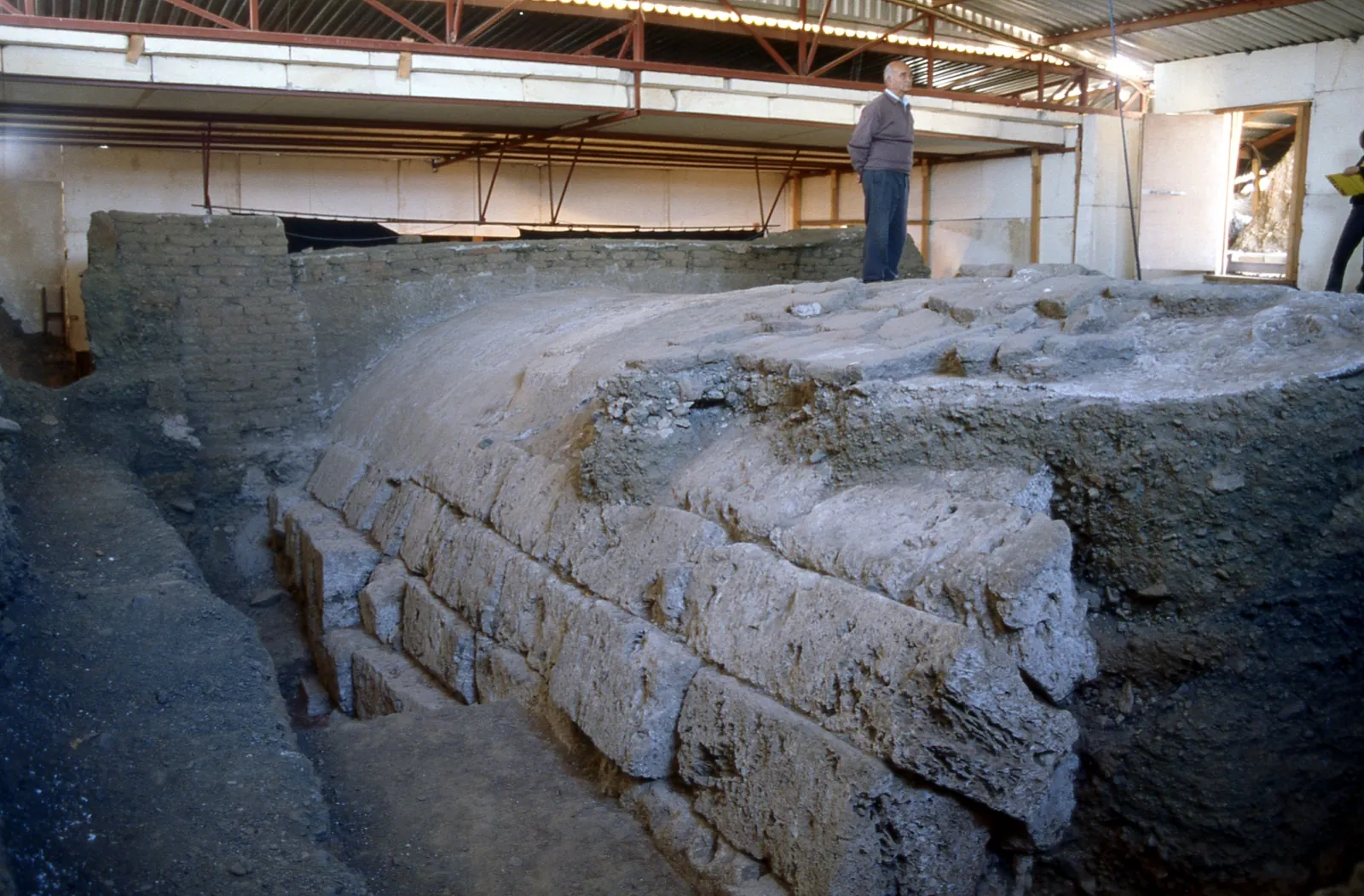
In 1977 the Greek archaeologist Manolis Andronikos drove a trench into the Great Tumulus and found what almost no excavator ever finds: royal tombs that grave-robbers had missed. Beneath the mound lay a cluster of 4th-century-BC chambers — and two of them were still sealed.
Andronikos on the discovery. Tombs II and III were found intact; Tomb I had been robbed in antiquity, though it kept its extraordinary wall paintings.
Down into the dark
The mound you see today is a reconstruction. Inside it, a climate-controlled shell holds the tombs exactly where they were found, and visitors walk down into a deliberately dim, earth-covered hall. You do not view these tombs behind glass in a bright gallery — you descend to them, underground, in the half-light, as the Macedonians intended.
The doors that were never robbed
An intact royal tomb is almost a contradiction in terms. Nearly all were emptied within a generation. Tombs II and III at Vergina were not.
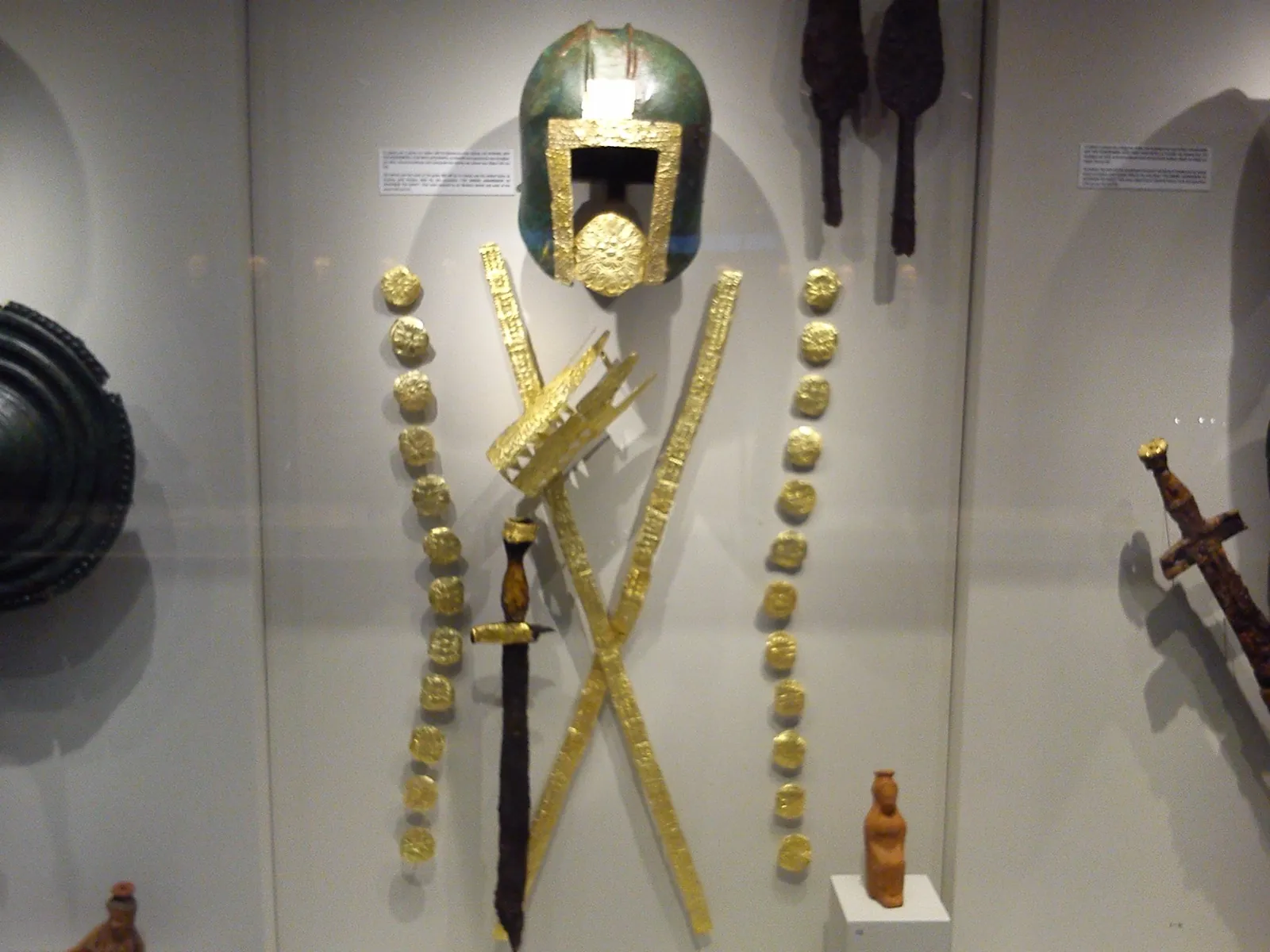
Behind their marble doors lay the complete funerary world of a Macedonian king: gold and silver vessels, ivory-inlaid furniture, ceremonial armour and a shield, weapons — and, at the heart of it, the caskets of the dead. What follows is what those sealed chambers gave up.
A star upon the gold
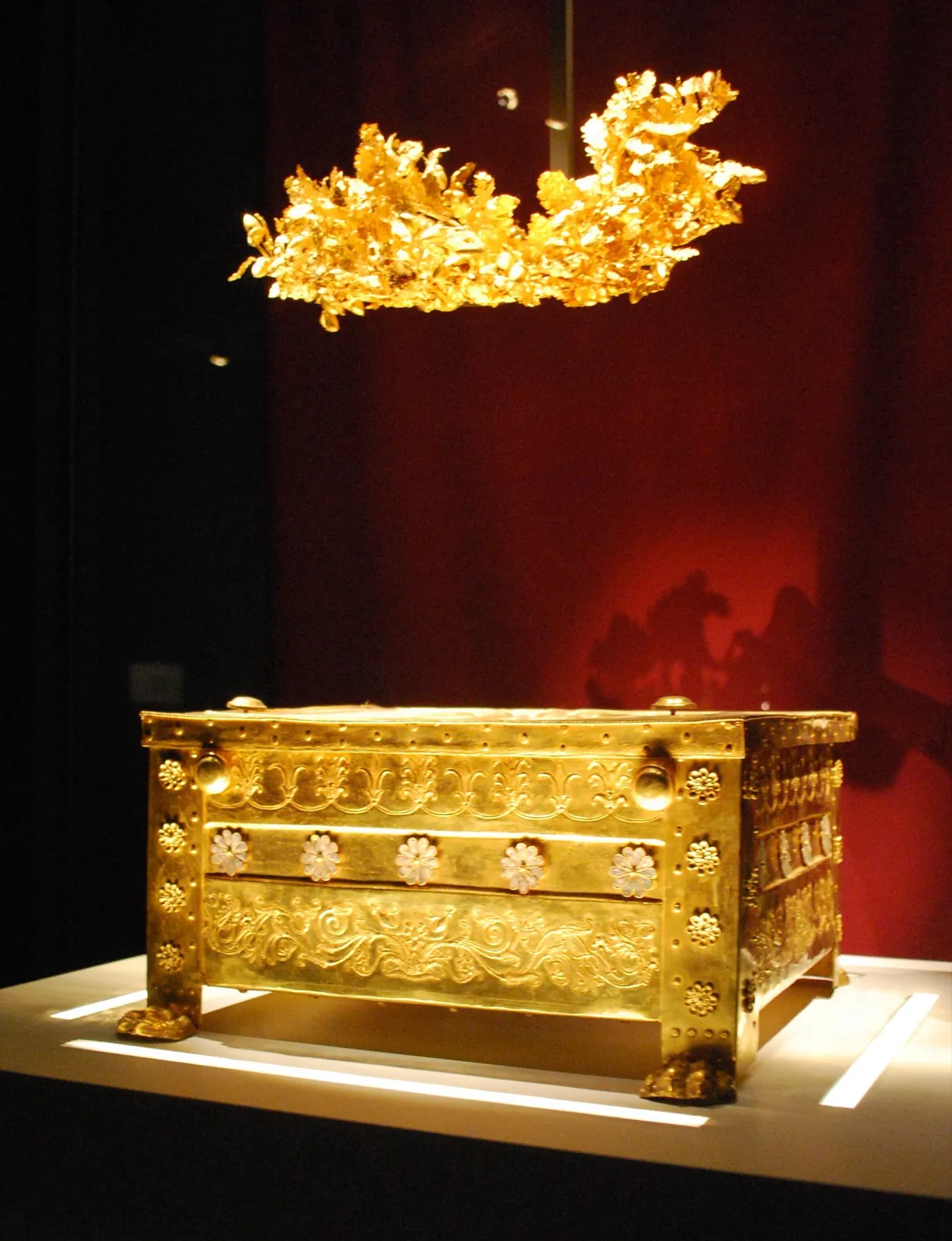
Inside the main chamber stood a solid gold larnax — a casket — its lid embossed with a sixteen-ray sunburst now known the world over as the Vergina Sun. It held cremated human remains. A second gold larnax, with its own star, lay in the antechamber.
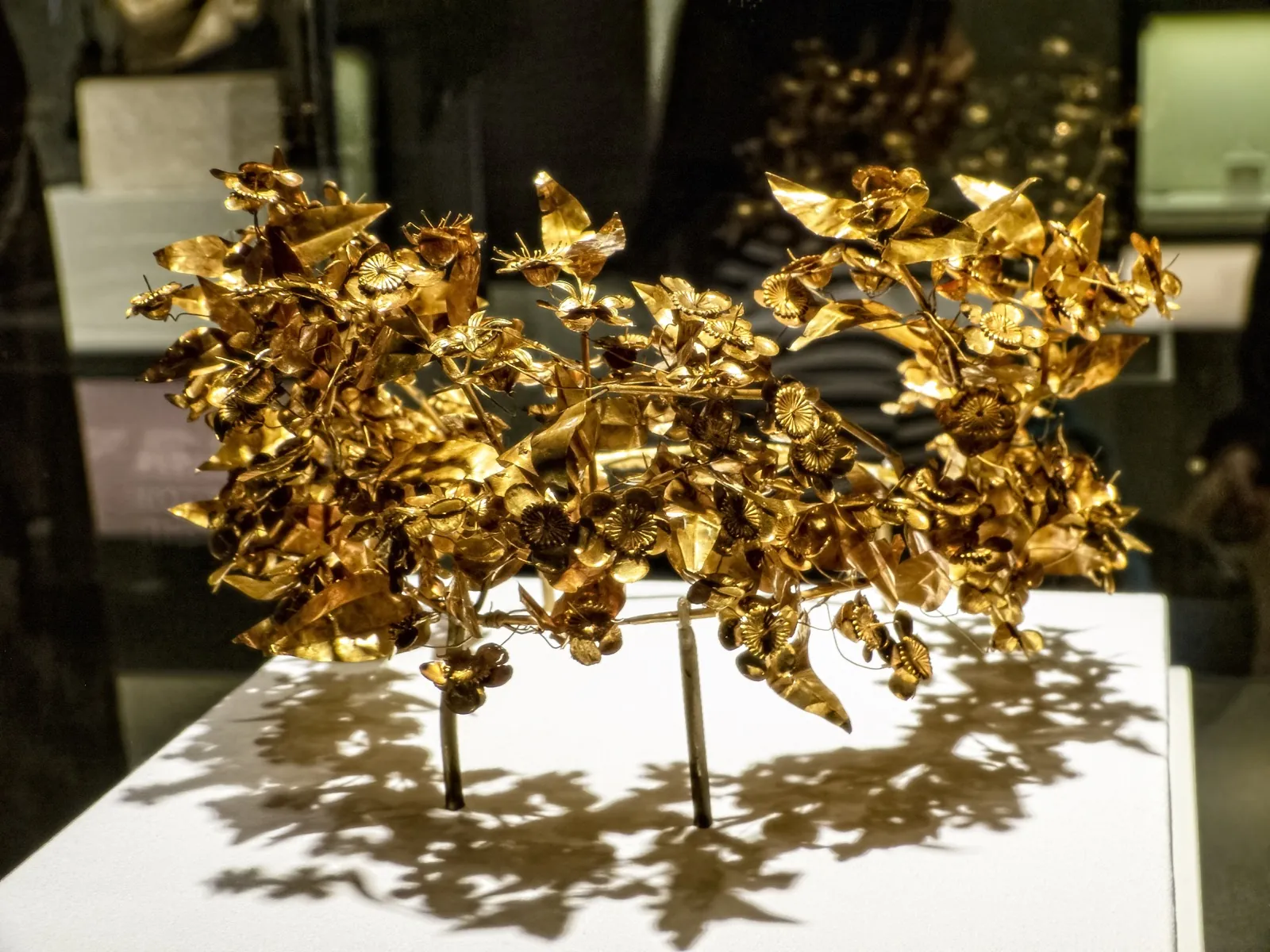
With them were gold wreaths of almost impossible delicacy — leaves, acorns and flowers hammered from sheet gold — among the finest goldsmithing to survive from the ancient world.
A painted hunt on a king's wall
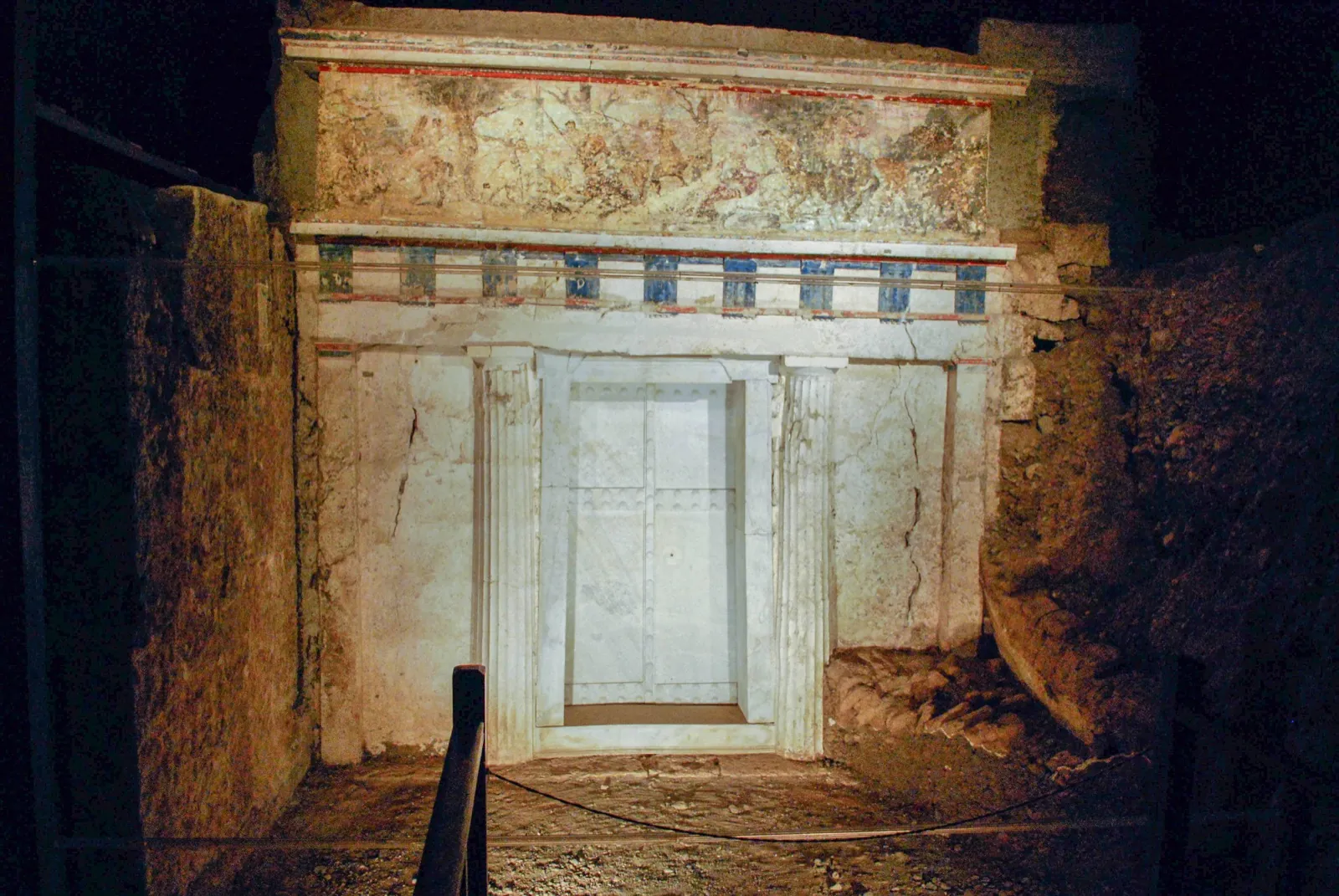
Across the façade of Tomb II runs a hunting frieze — riders and hunters closing on lion and other game — one of the very few monumental ancient Greek paintings to survive at all. In nearby Tomb I, a wall bears the celebrated Abduction of Persephone, a masterwork of 4th-century-BC painting. These are not copies or mosaics. They are the actual painted hand of the ancient world.
Whose bones are these?
Andronikos believed he had found Philip II himself, and that is the traditional and official identification of Tomb II to this day.
An open debate — not a settled fact
In 2015 a study led by Antonis Bartsiokas argued the opposite: that the male skeleton in Tomb I shows the fused, stiffened knee matching Philip's recorded battle wound and lameness — making Tomb I his resting place, and Tomb II that of his son, Philip III Arrhidaeus. The Greek Ministry of Culture disputes this.
The question is one of the most contested in Greek archaeology, and it remains genuinely unresolved. Stand in the tomb, and you stand inside an argument that is still going on.
Visit the Royal Tombs of Vergina
Vergina sits about 75 km from Thessaloniki, with no direct train. Most international visitors come on a guided day trip — transport, context and the natural pairing with ancient Pella, all handled. These are the best-rated options, fulfilled by GetYourGuide with free cancellation.
Vergina & Pella Day Trip
- Both royal capitals in one day
- Round-trip transport included
- The classic Macedonian-heritage loop
Vergina, Agios Nikolaos & Edessa Falls
- The tombs plus Edessa's waterfalls
- A fuller day out of the city
- Highest-rated of the day trips
Aigai Royal Tombs & Pella Museum
- Both museums, guided in depth
- Smaller-group experience
- Strong on history and context
Pella & Vergina Private Day Trip
- Private vehicle and guide
- Set the pace for your group
- One flat price for up to 8
Prices shown are indicative starting rates in AUD; you'll see your own currency and current availability on GetYourGuide.
Before you go
Is the tomb really Philip II's?
Tomb II is traditionally and officially identified as the tomb of Philip II, father of Alexander the Great. But the attribution is genuinely debated: a notable 2015 study argued that Philip II actually lies in Tomb I, and that Tomb II holds his son, Philip III Arrhidaeus. The question remains unresolved among scholars.
How do I get to Vergina from Thessaloniki?
It's about 75 km (roughly an hour) southwest by car. There's no direct train — public transport means a bus toward Veroia and a local connection — which is why many visitors drive or join a guided day trip that includes transport and a guide.
What will I see?
The underground Museum of the Royal Tombs shows the actual tombs in situ, the gold larnakes with the Vergina Sun, gold wreaths, armour and the painted hunt frieze. The wider Polycentric Museum of Aigai also takes in the Palace of Aigai, the ancient theatre and the necropolis.
How long do I need?
Roughly 1.5–2 hours for the tomb museum, or about half a day to include the palace, theatre and central museum. Day trips from Thessaloniki usually pair Vergina with ancient Pella.
When is the best time to visit?
Spring and autumn bring milder weather and lighter crowds. The museum is climate-controlled and open year-round, but note the reduced or closed hours on Tuesdays. Always confirm current opening hours on the official museum site before travelling.
Is it worth it?
Yes — intact 4th-century-BC royal tombs, their gold treasures and rare surviving ancient Greek wall paintings, shown inside the burial mound itself. It's a UNESCO World Heritage Site and one of Greece's greatest archaeological discoveries.